



Article - December 5, 2023
Produce and Fresh Food Distribution: How Leaders Are Tipping the Scale
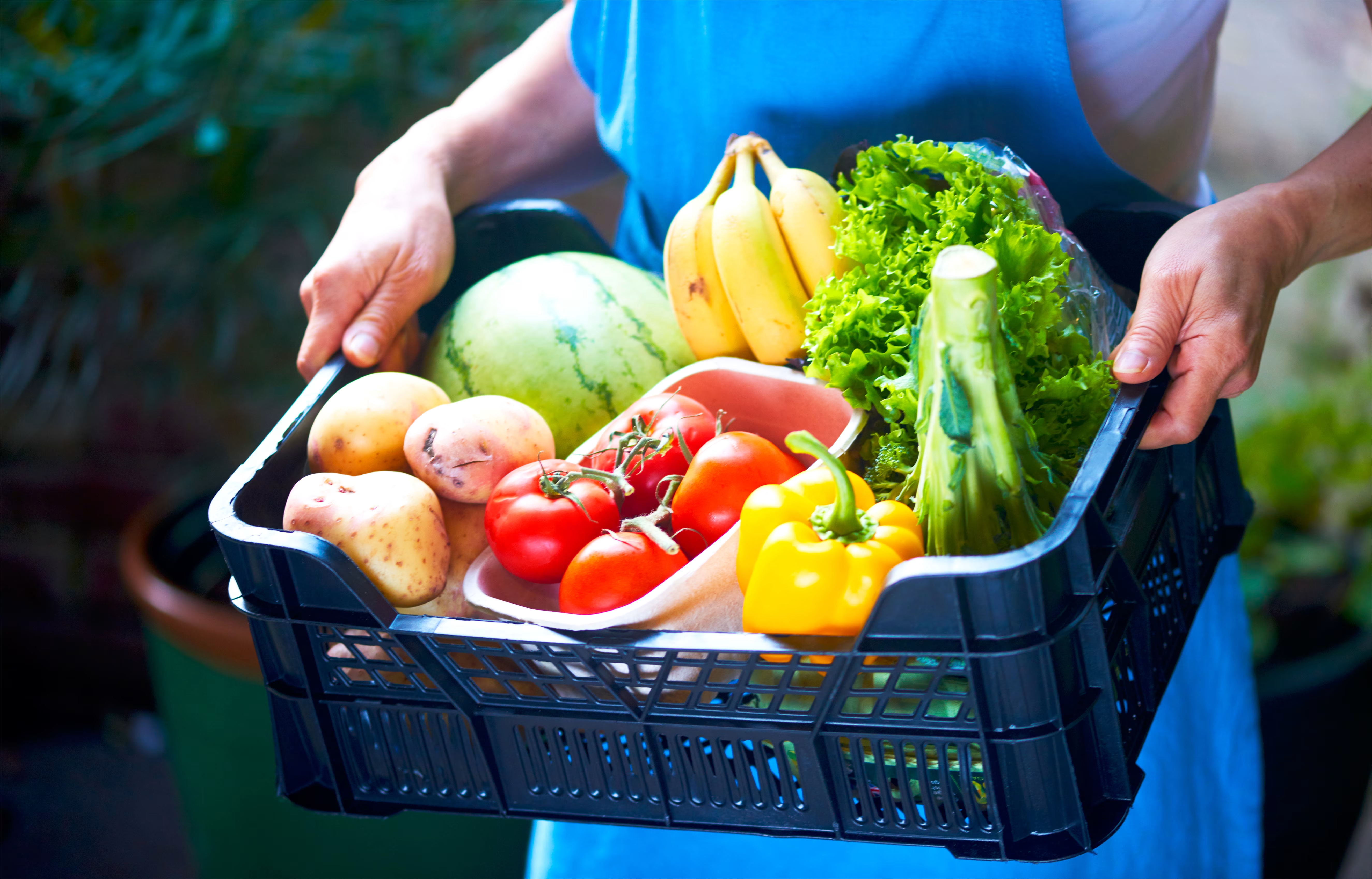
Strong tailwinds are driving growth in the produce distribution sector across foodservice and grocery channels. Given its fresh, perishable nature and the complexity of sourcing quality products year-round, produce demands unique specialization across the supply chain. The market requires distribution partners that consistently deliver quality and reliability, and several platforms have unearthed winning formulas to maintain high customer service levels while building scale.
Harris Williams recently worked with several companies that exemplify the growth opportunities in produce distribution, including BIX Produce Company, FreshEdge, Mr. Greens, and Worldwide Produce. Below, senior professionals from our Consumer Group share the trends buoying investor enthusiasm for the sector and how leading businesses can differentiate.
Fresh Ways to Grow
Changes in consumer preferences underlie much of the rising demand for fresh produce. Tim Alexander, a Consumer Group managing director, notes that consumers have a greater desire for higher-quality, healthier, and more sustainable fresh foods both at home and away from home. In fact, two out of three U.S. consumers report an increase in fresh food purchases, with 80% of their purchases motivated by seeking healthier options.1
He also cites the rapidly evolving away-from-home dining ecosystem as a generator of growth. “There’s explosive interest in chef-driven and independent local restaurants that use fresh ingredients and more produce,” he says. At the same time, an increasingly diverse population and a desire to experience new, exciting dishes are driving a strong appetite for ethnic and fusion restaurants. “For this cuisine, high-quality produce is a critical ingredient of many dishes,” he adds.
While demand for produce is strong, fresh food distribution can be a challenging area to excel in. Brant Cash, a Consumer Group managing director, notes that excellence in managing a cold chain, year-round procurement, and customer centricity are three vital requirements for leading businesses in the sector.
“Many independent restaurants need deliveries multiple times per week, if not daily,” he says. “If a chef runs out of a key ingredient, certain dishes must come off the menu. Because of this, it’s essential that distributors offer frequent and responsive service, as well as the product breadth that restaurants demand. Those that do these things well can stand out from broadline distributors and capture market share.”
“Because produce distribution is hard to do, there’s typically very high retention once a customer relationship is established,” adds Andy Warczak, a Consumer Group director. This also opens the door for the distributor to cross-sell other products. “When you’re a leader at supplying hard-to-distribute goods like produce, you are much more likely to be trusted to supply an expanded range of other items from proteins to frozen fruit purées. This provides a meaningful lift in drop economics,” he says.
Building the Benefits of Scale
Because produce distribution requires specialized expertise, the market developed a high degree of fragmentation, which creates substantial value-creation potential for investors. “Most geographic markets have multiple distributors serving their local radius, many of which remain family-owned today,” says Richard Furseth, a Consumer Group vice president. “There’s a real opportunity to scale through inorganic growth and gain significant benefits.”
For instance, scale enables produce distributors to procure larger quantities and wider varieties of produce more consistently year-round. “Grower partners appreciate the size and consistency of orders, while customers benefit from higher-quality produce. It’s truly a win-win-win,” continues Furseth.
At the same time, scale gives businesses the resources to invest in better technology. Advanced systems can help optimize routes, increase warehouse picking and inventory management efficiency, and improve customer support. Best-in-class ERPs can also offer insight into the cost of serving each customer, and alternative pricing and distribution models. “As a distributor scales, it can build more sophisticated cost-to-serve models to more efficiently deliver to customers while maximizing margins,” explains Alexander. “Plus, technology can support product traceability from the time it leaves the farm to its end use, which has become more important due to recent supply chain disruptions and an increased focus on food safety.”
“What’s interesting is how select, scaled distributors like FreshEdge and BIX are investing in value-added capabilities like cutting and mixing. These capabilities create closer customer relationships and help them reduce labor at restaurant or retail locations,” says Warczak. This solves a large need in the market to streamline back-of-house operations and improve product consistency. It also unlocks new avenues for growth from items like grab-and-go sandwiches and salads that can be sold into retail, convenience store, or non-commercial channels like colleges, hospitals, and hotels.
“The benefits gained through scale in this sector are significant, both in top-line growth and cost synergies,” adds Cash.
Delivering Value: Examples of Sector Leaders
Harris Williams has worked with multiple leading produce distributors that highlight the sector’s growth opportunities and the many ways investors can participate.
These companies share several sought-after traits, including differentiated customer service models, high-quality products, proven M&A strategies, technology investment, broad geographic footprints, and value-added service offerings. Importantly, they also all showcase the value-creation benefits of scale as they’ve grown.
BIX Produce Company: BIX Produce distributes traditional, specialty, and pre-cut fruits and vegetables, dairy, and related food items, as well as prepared sandwiches and salads. “BIX’s value-added, fresh-cut, and prepared foods capabilities make it a highly appealing business,” says Furseth. “In addition, the company’s sector expertise and complementary capabilities provide multiple avenues for growth.”
FreshEdge: FreshEdge has become one of the largest independent fresh food distributors in the U.S. Through multiple acquisitions and strategic operational investments, the company is now a category leader in providing both the foodservice and retail industries with fruit, vegetables, proteins, fresh-cut produce, fresh grab-n-go offerings, dairy, floral, and specialty products. “The FreshEdge team built a fresh food distribution platform that strikes the perfect balance of customer-focused, localized service with the benefits of scale,” says Alexander.
Mr. Greens: Mr. Greens is a rapidly growing distributor of produce, dairy, and specialty food items to the restaurant and hospitality industries in Florida and Texas. “Mr. Greens excels at providing premium service. It’s dedicated to solving customers’ planned and unplanned requirements, including making multiple deliveries per day if needed,” says Alexander. “The company has exceptional product breadth and availability. This unique and curated offering includes high-margin specialty produce items based on their industry knowledge and insights.”
Worldwide Produce: Worldwide Produce is a leading distributor of fresh fruits, vegetables, dairy products, and specialty foods across the western U.S. Through selective acquisitions, the company capitalized on an opportunity to build a super-regional leader. “Worldwide Produce has a proven track record of adding new, independent, specialty food distributors to its footprint,” highlights Cash. “Each time, it has integrated its operations and strengthened its relationships with both growing partners and customers.”
A Truckload of Opportunity
Steady trends favoring healthier eating and high fragmentation across the produce distribution landscape position the sector for elevated M&A activity. For investors looking to put capital to work in the space, it’s clear that scale holds distinct advantages for leading produce distributors and their customers. The sector offers a wide range of ways to participate with significant potential for long-term growth through value-added service capabilities, broader geographic reach, and greater tech investment.
To discuss the value-creation potential of produce distribution in detail, please contact our senior professionals.
https://www2.deloitte.com/content/dam/insights/us/articles/5237_The-future-of-fresh/DI_The-future-of-fresh.pdf
Select Activity





Contacts

Tim Alexander
Managing Director
Consumer

Brant Cash
Managing Director
Consumer

Graham Gillam
Managing Director
Business Services

Andy Warczak
Managing Director
Consumer

Richard Furseth
Director
Consumer

