Outlook 2026 Main Article Header

Article

Outlook 2026: Gaining Traction

Acceleration Amid Complexity, Innovation, and Optionality

As 2026 unfolds, global M&A and private capital markets are accelerating. While nuanced and complex, a range of market conditions are underpinning a supportive environment for M&A by both strategic buyers and institutional investors, including abundant liquidity, supportive credit markets, and stabilizing inflation.

At the same time, there is substantial complexity for both buyers and sellers to manage as they seek to take advantage of this increasing momentum. Buyer attention remains sharply focused on top-quality opportunities. The rapidly evolving private capital markets are presenting a wealth of new options to understand and integrate into strategic decisions. AI and data analytics are creating substantial rewards and risks as well as new investment approaches. The global geopolitical and regulatory environment will continue to create new hurdles and opportunities, and the universe of potential M&A buyers keeps getting larger and more diverse.

Here, we explore these dynamics, drawing on recent experience to chart a path forward for both buyers and sellers. 2026 is rich in opportunity, with the greatest rewards going to those who can adapt to changing conditions, embrace expanding optionality, and be ready to act decisively.

Key Factors Shaping 2026 Activity 

  • Macro Tailwinds Are Supporting Acceleration  
    M&A activity is gaining speed in 2026, supported by strong liquidity, favorable credit markets, and strategic buyer engagement. Quality assets remain in high demand, making decisiveness and differentiation critical for success.   

  • Private Capital Is Rapidly Growing and Evolving 
    Continuation vehicles, junior capital, and alternative financing are reshaping deal strategies, offering new paths to liquidity and growth. These innovations are expanding options beyond traditional exits and creating a more flexible M&A playbook.   

  • AI and Data Analytics Are Catalyzing M&A 
    AI adoption is driving major investment in the “picks and shovels” of digital infrastructure—data centers, power systems, cooling solutions, and connectivity—needed to support explosive computing demand. These foundational assets are becoming prime targets for M&A as sponsors seek to capitalize on long-term growth in AI-driven infrastructure. 

  • Dynamic Geopolitics and Regulations Are the New Normal 
    Global political shifts and regulatory changes are influencing cross-border deal flows, supply chain strategies, and sector valuations. Buyers and sellers must plan for a dynamic environment and adapt structures to navigate shifting opportunities and challenges.   

  • The Buyer Universe Continues to Expand 
    Beyond private equity and strategic buyers, sovereign wealth funds, family offices, and infrastructure investors are reshaping the M&A landscape. This diversification creates more liquidity and competitive tension, requiring nuanced positioning and flexible deal structures. 

Macro Tailwinds Are Supporting Acceleration

Main-Image-01

With the final months of 2025 having shown building M&A market momentum, 2026 is shaping up to be a year of even greater potential. “We’re seeing acceleration in the M&A market,” says John Neuner, Harris Williams Co-CEO. “Despite some pockets of remaining slowness, businesses have adapted well to market trends and are utilizing M&A to broaden their capabilities, unlock the benefits of scale, and position themselves to capitalize on the opportunities in their sectors. Their confidence in the market tailwinds has given management teams and buyers conviction in their investments and is pushing M&A volumes higher.”

As shown below, these tailwinds include ample dry powder, competitive credit markets, and stabilized inflation pressures, all of which underpin a supportive environment for increased M&A volumes.

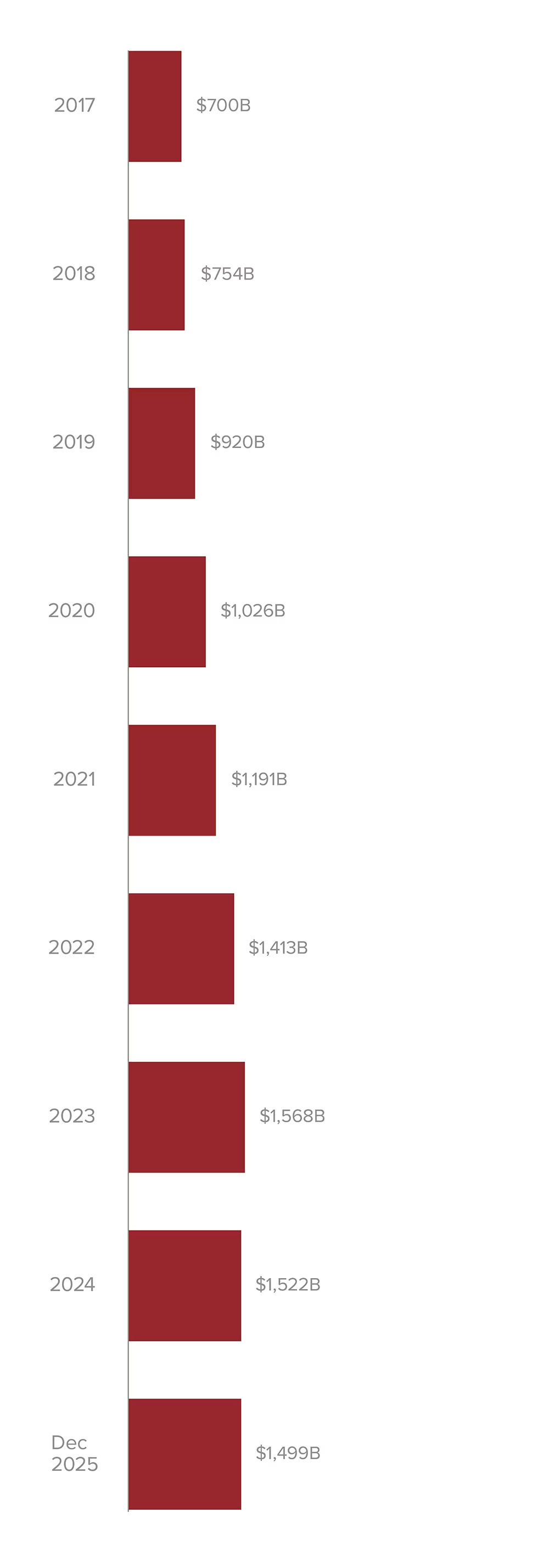
To begin with, private equity investors continue to hold large amounts of dry powder in need of deployment, driving strong interest in high-quality opportunities (Figure 1).

Figure 1: U.S. & Canada Private Equity Dry Powder

HW-MarketDynamicsChart-1217 mobile-med-1HW-MarketDynamicsChart-1217 mobile-med-1
Source: CapIQ

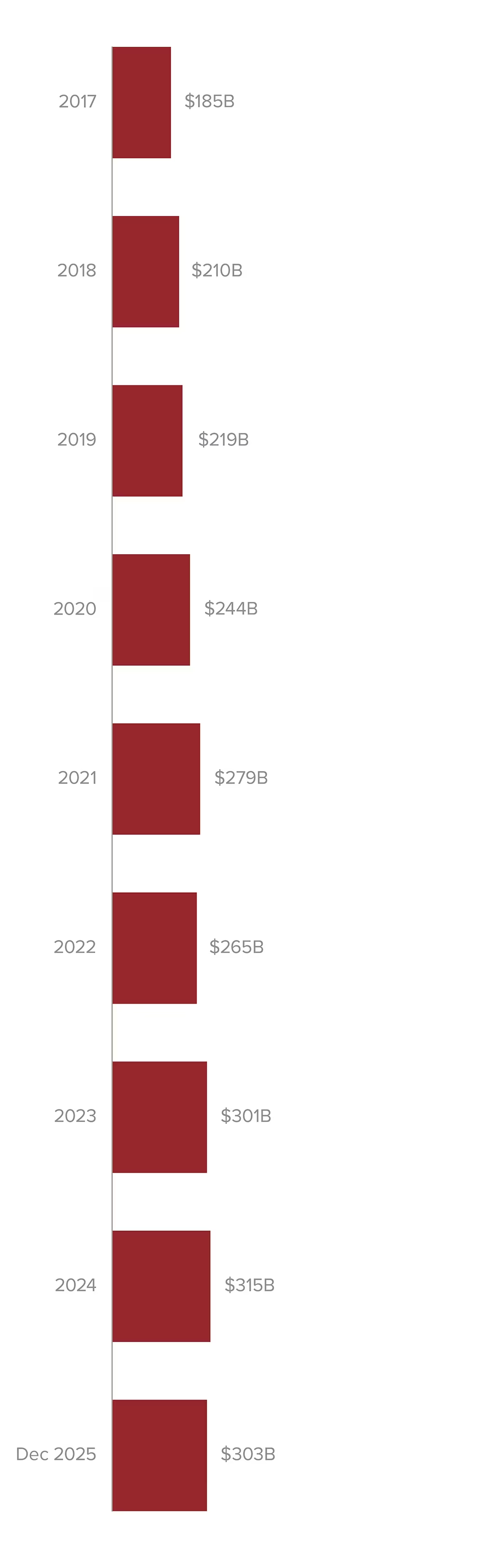
As shown in Figure 2, private credit markets are likewise flush with capital, facilitating ongoing strength in the M&A environment.

Figure 2: U.S. & Canada Private Credit Dry Powder

HW-MarketDynamicsChart-1217 mobile-med-2HW-MarketDynamicsChart-1217 desktop-med-2
Source: CapIQ

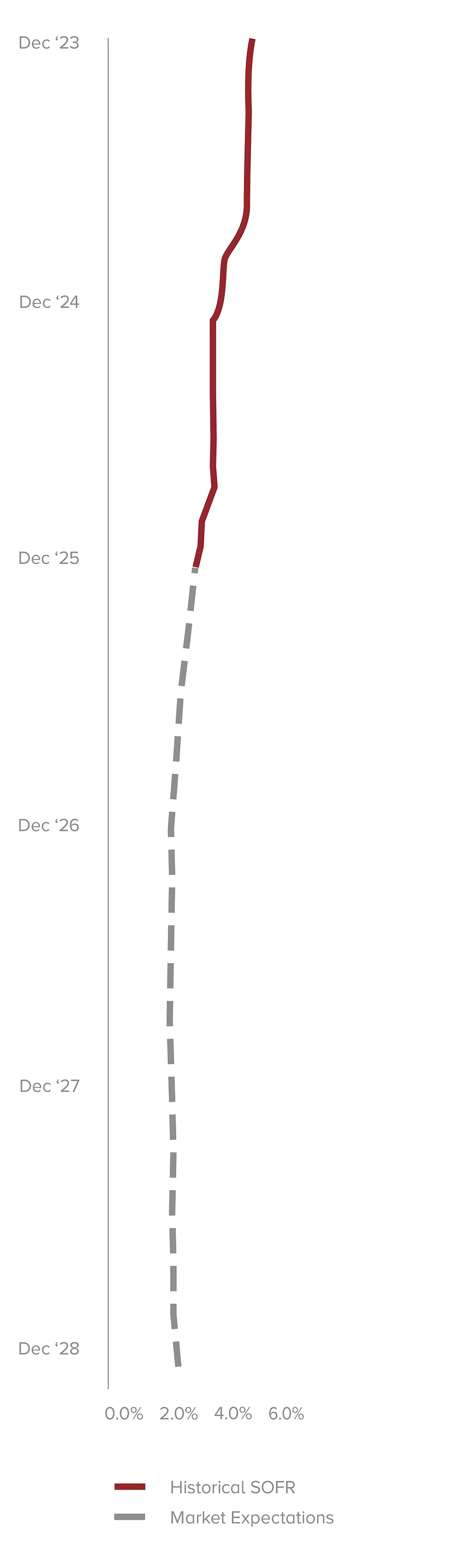
Adding to the momentum, the Fed reduced rates for the third time in December 2025, with the market expecting stabilization going forward (Figure 3).

Figure 3: Historical and Forward SOFR Rates

HW-MarketDynamicsChart-1217 mobile-med-3HW-MarketDynamicsChart-1217 desktop-med-3
Source: CapIQ; Pensford Financial

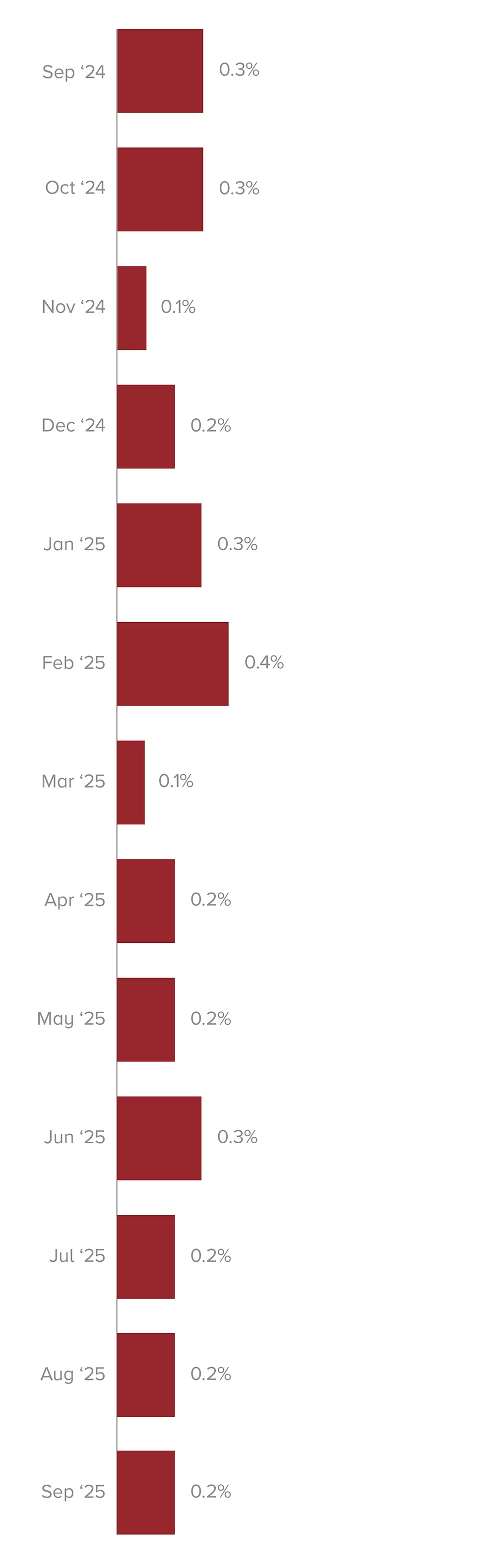
Similarly, inflation has stabilized in recent months, adding an additional degree of predictability to the macro environment.

Figure 4: Personal Consumption Expenditures (excl. Food & Energy)

HW-MarketDynamicsChart-1217 mobile-med-4HW-MarketDynamicsChart-1217 desktop-med-4
Source: BEA.gov

Against this backdrop of liquidity and increased stability, M&A continues to gain traction. Indeed, Harris Williams is seeing intense interest in high-quality assets, which is poised to continue well into 2026. “We’re experiencing the market’s increased velocity firsthand,” says Bob Baltimore, Harris Williams Co-CEO. “Firmwide metrics point to the market’s appetite for differentiated businesses: increasing deal flow, a solid pitch pipeline, and a backlog of high-quality transactions that is at or near historic highs.”

“We continue to see high-performing businesses in sought-after sectors transact at historically attractive valuations and terms,” notes Bruce Kelleher, head of Financial Sponsor Coverage. “Competition among buyers in this segment of the market remains intense.”

A Market Flush with Liquidity Options

In addition to substantial private equity dry powder, corporate balance sheets remain flush with cash while stock values are strong. This is providing significant firepower for strategic buyers, who have been highly engaged in a wide range of Harris Williams transactions throughout 2025. “Strategic buyer participation in our engagements has been significant over the past year, and we expect that to continue as we enter 2026,” says Frank Mountcastle, head of M&A. “In some of our industry groups, strategics have been involved in close to 75% of the transactions we’ve taken to market in recent months.”

Another key to the market’s increasing velocity is the supportive lending environment. “The market remains issuer-friendly for strong companies, with leverage and pricing metrics as favorable as they have been in several years,” says Bill Watkins, a managing director. “Lenders are actively pushing to deploy capital against a growing opportunity set of new M&A transactions.”

Andrew Gulotta, head of Private Capital Solutions, adds that the preferred equity and junior capital markets remain healthy, well capitalized, and flexible. “The junior capital market is highly constructive, mirroring the liquidity of the senior debt market,” says Gulotta. “Capital is being deployed for various uses, including add-on acquisitions, dividends, minority recaps, and refinancings designed to reduce senior leverage.”

“The menu of liquidity options has never been as expansive as it is today,” says Mountcastle. “While that’s a good thing, it also creates some complexity for our clients to manage. We’re seeing more clients seeking our advice with respect to navigating their options.”

Amid this strengthening, a focus on quality still reigns. “As ever, our buyers are focused on businesses with sustainable, accelerated growth, large addressable markets, and strong competitive advantages,” says Neuner. “Those tied to megatrends or with built-in resilience to market disruptions are rising to the top. Conversely, assets in the market with less-than-stellar performance or other issues are generating less buyer attention. In a market this nuanced, quality is king.”

The momentum we’re seeing in the M&A market is a positive indicator for fundraising in 2026. “As funds execute more successful exits and new investments, delivering returns to limited partners, fundraising will follow suit,” says Frank Edwards, co-head of Primary Fund Placement. “That bodes well for an active 2026.”

Read more about our 2026 outlook for primary fund placement. 

Decisiveness, Differentiation, and Flexibility

Despite some pockets of remaining sluggishness, the M&A market is accelerating in 2026, fueled by the need for DPI, ample dry powder, highly functioning and supportive credit markets, strategic buyer activity, and a growing ecosystem of institutional investors seeking deployment. Looking ahead, we’re optimistic that an improving macroeconomic environment will drive even greater M&A activity.

“Sellers of well-positioned, high-growth assets are capitalizing on strong buyer appetite and favorable financing by moving to market quickly, ensuring their growth narrative is differentiated and compelling,” says Baltimore. “Successful buyers are acting quickly to diligence and pursue top-tier opportunities with conviction.”

Against this backdrop, the breadth of available capital—ranging from senior debt to junior and minority capital—empowers both buyers and sellers to consider more creative transaction structures, from full buyouts to partial exits, recaps, and hybrid deals.

Given these dynamics, the 2026 M&A market will reward decisiveness, differentiation, and flexibility. Buyers are seeing a long-awaited expansion of high-quality opportunities, while sellers have an expanding universe of options to unlock value. “This is an exciting time to be working with great businesses across so many industries,” says Neuner. “Buyers are eager to tap into the value creation opportunities our clients represent.”

Private Capital Is Rapidly Growing and Evolving

Main-Image-02

Just a few years ago, private capital solutions such as continuation vehicles (CVs) and junior capital were relative novelties to many M&A investors. Now, both the secondaries and junior capital markets are on pace to reach record volumes in 2025. Looking ahead to 2026, the secondaries market alone is projected to reach $381 billion in 2029, up from approximately $200 billion in 2025.1

Expanding Relevance of Continuation Vehicles

One factor behind this growth is the expanding relevance of continuation vehicles (CVs) in today’s M&A market. For example, while seller-buyer valuation gaps are steadily narrowing, in some cases they remain a key point of friction for traditional M&A. “In such instances, CVs create a viable path to liquidity, allowing general partners to generate distributions for limited partners,” says Gulotta.

CVs also allow sponsors to execute longer-term value creation plans for assets in choppy M&A markets or invest more time and capital in growth businesses. Likewise, CVs enable limited partners seeking liquidity to cash out at a fair market price, while those who believe in an asset’s continued growth can roll their proceeds into the new vehicle. In addition, CVs can help sponsors attract capital from new investors, who, in turn, get access to equity in a de-risked asset with a proven management team and institutionalized corporate infrastructure.

Harris Williams Engagement Spotlight

Amlon
A bespoke single-asset continuation vehicle enabled the sponsor to refresh equity, deliver early LP liquidity, and fund continued M&A-driven platform expansion amid fund concentration limits. 

As a result of the increasing relevance of CVs, many secondary funds are raising larger pools of capital and can now write larger checks. “These funds are leveraging their check size to backstop entire deals in the $250 million to $750 million range, offering sellers price, velocity, and certainty,” notes Jonathan Abecassis, a managing director. “Unlike in prior years, sellers can now pursue midsize secondary solutions with high confidence that a single buyer can complete the transaction.” Compounded by new entrants to the space, says Abecassis, this is leading to strong competition for mid-market CV opportunities, with more groups willing to act as lead investors.

However, while CVs are a core part of the toolkit, there are natural limitations to their scale. As such, larger single-asset CVs are often completed alongside or sequenced with a significant minority or co-control sale, providing a new value-added partner in the transaction, price transparency, and greater scarcity value for the CV.

And when planning their ultimate exit, investors must closely watch the IPO market, which is typically seen as the natural exit for the largest assets. “Appetite for the largest CV deals is likely to increase if the recent uptick in PE-backed IPO exits proves to be sustainable,” says Gulotta.

Alternative Financing Techniques Gaining Traction

In addition to the growing adoption of CVs, alternative financing solutions are steadily gaining traction when a CV might be considered premature or when a company’s owner is looking for a quicker path to liquidity. In such instances, investors are increasingly turning to company-level junior capital—most principally, preferred equity and paid-in-kind debt—or fund-level net asset value (NAV) financings.

“These financing techniques have become prevalent as a way for private equity sponsors to manage liquidity needs,” explains Richard Siegel, a managing director. “They can help fund growth-focused M&A or capex, without disturbing existing financing or burdening company cash flow. Alternative financing can also unlock trapped value in portfolio companies, allowing sponsors to generate liquidity without selling the business or diluting its equity position.”

A New Set of Options

The rapid growth and evolution of the secondary and junior capital markets are fundamentally altering the M&A playbook. Heading into 2026, the growth of CVs, junior capital, NAV financing, and preferred equity are creating a new set of strategic options that the most successful buyers and sellers will continue to adopt.

Specifically, the rise of the general partner-led secondary market provides a compelling alternative to traditional M&A exits—opening new avenues for liquidity, value crystallization, and proactive portfolio management. Similarly, the junior capital market serves as an agile, hybrid funding source, enabling organic growth, acquisition strategies, shareholder liquidity solutions, and refinancing activities.

In short, understanding how to navigate this new environment is critical for any M&A participant looking to generate value in 2026 and beyond.

Read more about key Harris Williams private capital market engagements and insights.

AI and Data Analytics Are Catalyzing M&A

Main-Image-03

As 2026 unfolds, rapid advancements in artificial intelligence and data analytics are driving the global economy, and by extension, M&A. Companies across industries are rapidly incorporating AI capabilities into their products and operations, and many find it faster to acquire capabilities than build them in-house.

Data analytics is closely related, with many companies seeking to acquire data-rich businesses or data management platforms to fuel their AI algorithms and gain actionable insights on customers. Perhaps most importantly, AI and related hardware and infrastructure—the “picks and shovels”—are fostering growth across the broader economy and creating major new investment opportunities.

“Investors are eager to tap into these tailwinds,” notes Baltimore. “A wide range of businesses with demonstrable relevance to data centers are seeing very robust values.”

Looking further ahead, the vast power demands of data centers will require substantial investment and innovation in power generation and grid resilience. U.S. data center power demand is projected to reach 123 gigawatts by 2035, up from 4 gigawatts in 2024.2 This is driving new investment in a range of power sources, including nuclear power.

In addition to aggressively pursuing these AI infrastructure-driven opportunities, some sponsors are also raising dedicated capital to execute AI-driven rollups and workforce transformations. “The goal for AI is not just cost cutting but also enabling top-line growth, operational efficiency and effectiveness, and long-term differentiation,” says Neuner. “AI enables companies to more quickly implement their strategies through increased workforce productivity, enhanced customer experiences, and faster analysis of data-intensive workflows.”

For example, subsectors like accounting, legal services, and insurance brokerage involve predictable processes that AI can streamline, allowing professionals to shift from task execution to client strategy. In residential and commercial services, AI can optimize scheduling, inventory management, and customer communication, improving technician efficiency and the customer experience. AI can also help healthcare provider businesses manage billing, patient records, and appointment scheduling, boosting efficiency and improving care coordination. In specialty distribution, AI is being used to transform distribution by scaling sales expertise, optimizing complex pricing and inventory, and improving customer acquisition through predictive analytics.

Harris Williams Engagement Spotlight

LayerZero
Power management solutions for data centers. 

“In essence, sponsors are raising capital not just to buy companies but to fund the acquisition of customers and data through M&A, which they then leverage with an AI-driven operational model to create market-leading, tech-enabled platforms,” says Baltimore. “These investments in AI also free up the people in businesses to think more deeply, make better-informed decisions, and solve more customer problems, all of which will help them build sustainable differentiation.”

While AI, automation, and the mushrooming data ecosystem are powerful value generators, they are not without risks. “Increasing adoption of these technologies can be a headwind for businesses and subsectors perceived to be on the wrong end of the trend,” says Neuner. “Disintermediation is a threat for some, while others will face tougher competition from AI-forward businesses that have achieved greater efficiencies, deeper insights, and more agility.”

Baltimore adds that both lenders and buyers are increasingly diligent on perceived AI and technology risks in their underwriting work: “As such, it’s important to ensure that businesses are forming a targeted AI strategy, being thoughtful around new use cases, and actively putting them into place. In some areas, companies without a well-developed AI strategy may attract increased scrutiny from potential buyers and lenders.”

Rewards and Risks

In 2026, M&A investors are increasingly considering how a platform’s data, processes, and people can be transformed and scaled through AI. In addition, businesses with unique, high-quality datasets or proven AI tools can be more valuable due to their ability to drive product innovation and operational efficiency. Investors eager to tap into these tailwinds can also prioritize investments in AI and data-related infrastructure, including data centers, power infrastructure, connectivity solutions, and cloud services.

Investors are also staying mindful of AI watchouts: Some businesses lagging on AI could risk being disintermediated or being outpaced by more innovative competitors. “Proactively consider and address AI vulnerabilities and opportunities, particularly in sectors characterized by routine and undifferentiated services or processes,” says Neuner. “Leaning into the power of AI and data will unlock the next chapter of growth for a wide range of businesses, but only if they approach it with eyes open.”

Dynamic Geopolitics and Regulations Are the New Normal

Main-Image-04

Looking ahead, highly dynamic geopolitical conditions will continue to have a profound influence on the global M&A environment,creating both opportunities and risks for buyers and sellers. And while the headlines continue to come, M&A buyers and sellers are steadily acclimating to today’s dynamic environment and finding new pathways to value creation.

Supply Chains and Defense in Focus

For example, the strategic rivalry between major economies, most notably the U.S. and China, and the threat of protectionism such as tariffs are reshaping corporate strategies and, by extension, M&A. While tariffs have the potential to disrupt business models, they are also driving investments in onshoring and nearshoring in industrial markets around the world. Many Western multinational corporations are also de-risking supply chains by shifting manufacturing out of China to countries like India, Vietnam, or Mexico.

“Today’s heightened focus on supply chain security and resilience also elevates the value propositions of a wide range of businesses, including logistics services providers, transportation infrastructure providers, distributors, and suppliers of a wide range of supply chain-focused services and technology,” notes Mountcastle. “Businesses across industries and geographies are looking for expert advice and innovative solutions to navigating global trade challenges, opening up a host of growth and investment opportunities.”

In addition, heightened global defense spending is driving increased M&A in the aerospace and defense and technology sectors, with companies in these sectors merging to combine R&D efforts or acquiring to obtain specific technologies—for example, drone or cybersecurity firms.

Active Cross-Border M&A

Geopolitical dynamics also influence cross-border M&A flows. “The strong U.S. dollar and growth outperformance of the U.S. make American companies attractive targets for foreign acquirers, especially Europeans looking for growth exposure,” says Thierry Monjauze, Co-Head of Technology. In fact, the second half of 2025 saw a significant increase in U.S.-based company acquisitions by European sponsors, with the volume of such transactions growing by 36% year over year in the third quarter alone.3  

At the same time, says Neuner, the relatively lower valuations and slower growth in Europe is providing an arbitrage opportunity for U.S. companies making European acquisitions: “As such, we anticipate active two-way transatlantic deal flow in 2026.” 

In Asia, Japan continues to become an increasingly important participant in global M&A. “Japanese firms have been acquisitive abroad, aided by cash-rich balance sheets, new takeover guidelines, and strong interest in overseas acquisitions for diversification,” says Daniel Wang, head of Asia-Pacific and Sovereign Wealth Funds. “We expect this trend to continue creating opportunities for U.S. and European firms in 2026.”

Simultaneously, many countries have tightened foreign investment regulations for sensitive sectors such as technology, infrastructure, and agriculture for the sake of national security. This raises the bar for cross-border M&A in those areas, requiring careful structuring to avoid transfer of sensitive IP, as well as for regulatory approval processes, notably CFIUS in the U.S.

“Savvy buyers and sellers are increasingly viewing opportunities through a geopolitical risk and opportunity lens,” says Neuner. “They’re also planning on the additional time and resources required to manage the CFIUS review process and other regional review requirements.” 

On a more positive note, a more pro-business U.S. administration appears to be easing some M&A hurdles related to HSR approvals, says Neuner. “We’re seeing approval timelines contracting and more early terminations than under the previous administration. That’s a welcome shift in today’s busy market.”

Transacting Beyond the Headlines

Overall, global geopolitics will continue to be an important yet unpredictable influence on M&A, with the potential to introduce new challenges as well as avenues to value creation. Both buyers and sellers are making the most of the market’s acceleration by performing robust scenario planning, including political risk assessment in due diligence, and by being ready to structure deals or adjust expectations in light of geopolitical developments.

Concurrently, many buyers and sellers are steadily acclimating to today’s dynamic global environment, while the intensifying drive to deploy capital and generate liquidity are spurring continued market strengthening despite some remaining uncertainty. “There’s a growing consensus that headlines are having a more muted impact on M&A than they might have had in the past,” says Baltimore. “Businesses continue to perform, investors continue to seek returns, and the economy keeps chugging along.”

The Buyer Universe Continues to Expand

Main-Image-05

While the M&A landscape continues to see strong engagement from a growing variety of strategic buyers and private equity funds, a diverse and well-capitalized set of new buyers is becoming more prevalent. This diversification is creating a more complex, competitive, and opportunity-rich environment for sellers.

“Sponsors are eager to deploy capital and generate liquidity, and strategic buyers are active in many of our transactions,” says Mountcastle. “At the same time, Harris Williams M&A engagements now involve a much wider array of capital sources, each with distinct timelines, risk appetites, and strategic objectives, enhancing competitive dynamics and giving our clients more options to consider.”

Sovereign Wealth Funds

For example, sovereign wealth funds (SWFs) have rapidly become increasingly prominent, with immense capital pools and broad sector interests that make them desirable buyers for larger deals. SWFs typically seek minority investments, with a minimum equity check size near $350 million, although most prefer even larger tickets. This often places them in transactions with enterprise values of $1.5 billion and above, frequently as co-investors alongside private equity buyers.

While SWFs exhibit flexibility across sectors, they tend to avoid CFIUS-prone industries (e.g., defense, sensitive government contracts) and any areas that could entail reputational risk. Their priority, like most investors, remains growth-oriented, noncyclical business models.

Originally focused on limited partner stakes, SWFs have moved into coinvesting and now increasingly undertake direct, controlling investments. “SWF participation can be very helpful for sellers but demands sophisticated process management and early engagement to align with their rigorous investment criteria,” says Wang.

Family Offices

Family offices are another growing investor class in the M&A landscape, reshaping deal dynamics with patient capital and long-term strategic goals. Total estimated assets under management are projected to hit $5.4 trillion by 2030, up from $3.1 trillion in 2024.4

This investor class is increasingly favoring direct acquisitions over passive fund investments to gain greater control, transparency, and cost-efficiency. While historically focused on mid-market transactions under $25 million, family offices are increasingly seeking larger opportunities in growth sectors like technology, AI, and media.

Compared to a traditional private equity buyer, family offices typically have much longer investment horizons, sometimes with no fixed exit timeline. They can also be more flexible in terms of deal structures than some sponsors constrained by fund mandates and limited partner requirements. Family offices tend to base their decisions on specific family values and goals, with an eye toward long-term wealth and legacy preservation. “While not a perfect fit for every seller, family offices offer a unique value proposition for companies seeking a long-term partner that can bring strong cultural alignment,” notes Neuner.

Infrastructure Investors

In 2025, infrastructure funds raised a record-breaking $200 billion through the first three quarters.5 This surge, driven by the closing of several mega-funds, has already made 2025 the strongest fundraising year in infrastructure history.  

As the infrastructure market has proliferated and become more specialized, investors are increasingly targeting assets previously considered outside the traditional definition of infrastructure yet still possessing essential characteristics of this asset class. Such investors are increasing the pool of buyers and capital partners for a diverse range of businesses.

“This trend is driving more buying and selling activity among private equity funds,” says Mountcastle. “We’re seeing infrastructure funds pursue infrastructure-linked assets, as well as private equity funds assembling asset-based platforms attractive to infrastructure investors.”

A Fundamental Reshaping

Entering 2026, the ongoing rise of SWFs, family offices, and infrastructure investors is fundamentally reshaping the M&A landscape. Sellers benefit from more liquidity, competitive tension, and customized options, but success requires a nuanced understanding of each buyer type—their priorities, constraints, and how to best position an asset for them. Navigating this new environment calls for early, targeted engagement and a strategic, flexible approach to market engagement.

Buyers are benefiting by anticipating more competition for in-demand companies, being open to creative structures such as coinvests and earnouts, and continuously mapping and cultivating relationships with emerging buyer classes. As ever, offering sellers certainty and understanding their specific goals are powerful differentiators.

A Wealth of Potential

Main-Image-06

Against a backdrop of strong long-term tailwinds, the 2026 M&A landscape is providing buyers and sellers with an expanding set of opportunities.

Yet the environment is nuanced and is becoming more complex every day. Buyers are demanding proven quality. Innovation in private capital solutions is creating new strategic options for buyers and sellers. It’s becoming increasingly critical to assess how AI transforms and scales a platform’s data, operations, and talent. Global geopolitical dynamics will remain a significant—but unpredictable—influence on M&A, presenting both challenges and opportunities for value creation. And the continued expansion of the buyer universe is fundamentally transforming the M&A landscape.

Overall, 2026 offers a wealth of potential for buyers and sellers who can navigate this complexity with strategic conviction and tactical creativity and, by doing so, unlock the value of great businesses.

Leadership

Harris-Williams Bio-Crop 0046 EdArkus 1

Ed Arkus

Consumer

Harris-Williams Bio-Crop 0079 1118 JasonBass

Jason Bass

Industrials / Transportation & Logistics

Harris-Williams Bio-Crop Frank Edwards

Frank Edwards

Primary Fund Placement

HW-Sixpoint Bio-Crop AndrewGulotta

Andrew​ Gulotta

Private Capital Solutions

Harris-Williams Bio-Crop 0088 0924 BruceKelleher

Bruce Kelleher

Financial Sponsor Coverage

Harris-Williams Bio-Crop mkim 1

Michael Kim

Technology

Harris-Williams Bio-Crop Stephen Lessing

Stephen Lessing

Primary Fund Placement

Harris-Williams Bio-Crop 0099 0596 DerekLewis

Derek Lewis

Business Services

Harris-Williams Bio-Crop 0089 0914 BrianLucas

Brian Lucas

Business Services

Harris-Williams Bio-Crop 0009 0181 CheairsPorter

Cheairs Porter

Healthcare & Life Sciences

Harris-Williams Bio-Crop 0074 1198 GeoffSmith

Geoff Smith

Healthcare & Life Sciences

Harris-Williams Bio-Crop 0082 1012 DrewSpitzer

Drew Spitzer

Energy, Power & Infrastructure

Harris-Williams Bio-Crop dwang 1

Daniel Wang

Asia-Pacific & Sovereign Wealth Funds

Harris-Williams Bio-Crop 0042 Jacket No Tie Headshot Bill Watkins

Bill Watkins

Family & Founder-Owned Business Coverage

Harris-Williams Bio-Crop 0066 1442 TimWebb

Tim Webb

Industrials

Harris-Williams Bio-Crop 0102 0513 MattWhite

Matt White

Energy, Power & Infrastructure

Access Our 2026 Outlooks by Market

Article

Outlook 2026 | Aerospace, Defense & Government Services

The dynamic aerospace, defense, and government services industries offer many areas primed for M&A activity. From ramping commercial aircraft production, to continued growth in aviation aftermarket services, to the evolving defense landscape, these trends offer numerous opportunities for investors.
Article

Outlook 2026 | Business Services

To make the most of 2026, enterprises across geographies and sectors are continuing to focus on core areas of expertise, driving growth across commercial and industrial services, IT services, professional and tech-enabled services, and specialty distribution. “By outsourcing important functions, enterprises gain access to deeper skillsets, more up-to-date technology and approaches, economies of scale, and other benefits,” says Derek Lewis, a managing director and co-head of our Business Services Group.
Article

Outlook 2026 | Consumer

A broad array of consumer services with inherent recurring revenue characteristics will continue to be in demand and appeal to investors in 2026. Residential services, for instance, offer many attractive traits, with an aging housing stock, longer homeownership, and other themes creating a need for a range of solutions. Across several areas, there are ample opportunities for investors to professionalize leading businesses, leveraging technology, AI, marketing, and operational improvements to drive further growth and efficiency.
Article

Outlook 2026 | Energy, Power & Infrastructure

Investor interest remains strong for companies tied to a variety of megatrends, including the energy transition, electrification, and grid modernization; infrastructure upkeep and upgrades; and a heightened focus on sustainability, connectivity, and digitization. Throughout these areas, businesses that serve high-growth end markets with innovative, differentiated solutions will be particularly sought after.
Article

Outlook 2026 | Healthcare & Life Sciences

A wide variety of healthcare products and services create strong investor appeal due to their nondeferrable and recurring demand. Across the space, buyers are prioritizing businesses with strong organic growth, an emphasis on labor optimization, proven cost containment strategies, and limited exposure to challenging reimbursement dynamics.
Article

Outlook 2026 | Industrials

In 2026 and beyond, the industrials space is expected to see strong investor interest fueled by many long-term themes, including onshoring and nearshoring, electrification, infrastructure investment, digital transformation and technology adoption, sustainability, and others.
Article

Outlook 2026 | Primary Fund Placement

Following a somewhat challenging period for private equity fundraising, optimism is increasing for a resurgence throughout 2026. One of the key prerequisites, a strengthening M&A market, is already in process. “We’re seeing acceleration in the M&A market,” says John Neuner, Harris Williams Co-CEO. “Increasing transaction volumes are being supported by financial and strategic acquirers looking to invest across a broader base of sectors, sponsor desire to generate liquidity for their investors, the improving rate environment, and favorable credit markets.”
Article

Outlook 2026 | Private Capital Solutions

Heading into 2026, single-asset CVs are continuing to serve as vital tools for accelerating strategic transformation, as exemplified by our recent work with Heartwood Partners and the Amlon Group, a national leader in waste-to-value and industrial waste processing services. “The business had strong fundamentals, including secular tailwinds related to sustainability and the circular economy,” explains Andrew Gulotta, head of Private Capital Solutions. “While Amlon had achieved robust EBITDA growth through M&A and operational improvements, Heartwood encountered natural fund capital limitations to support continued expansion.”
Article

Outlook 2026 | Technology

For businesses of all types and sizes, technology is essential to achieve critical goals like facilitating revenue growth, boosting operational efficiency, and differentiating from the competition. As a result, organizations around the world and across industries are prioritizing digital transformation and AI adoption to improve performance while providing customers with more value.
Article

Outlook 2026 | Transportation & Logistics

Transportation and logistics M&A is well positioned for a rebound, with burgeoning enthusiasm for dealmaking among both businesses and investors. Many areas continue to demonstrate resilient demand, well-established growth drivers, and intact fundamentals, including automotive and heavy-duty aftermarket, third-party logistics (3PL), and transportation infrastructure services.
  1. “The Era of Mega-Consolidation is Here,” CNBC, November 2025
  2. Deloitte 2025 AI Infrastructure Survey
  3. Ropes Gray U.S. Private Equity Market Recap
  4. Deloitte
  5. Infrastructure Investor Fundraising Report Q3 2025